web builder


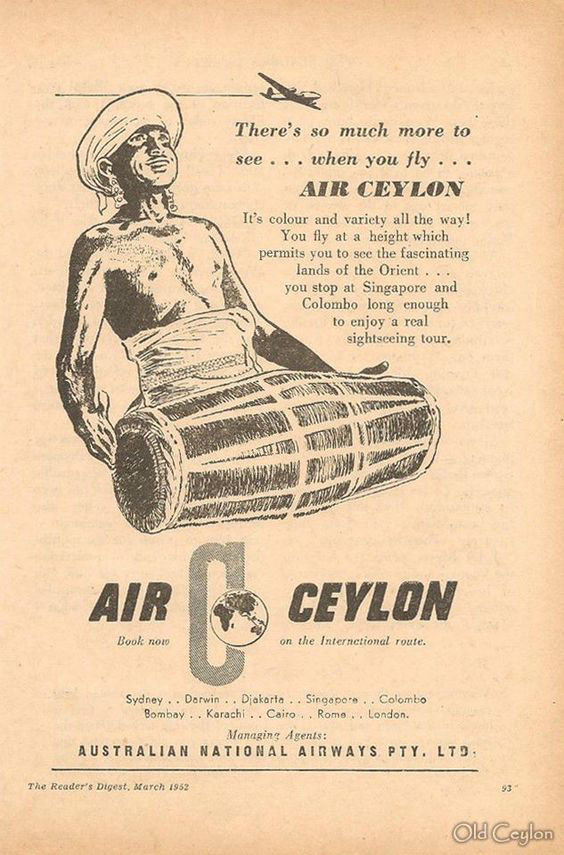
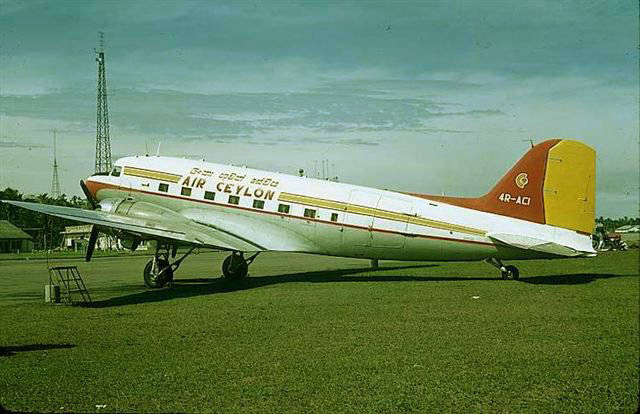
Air Ceylon
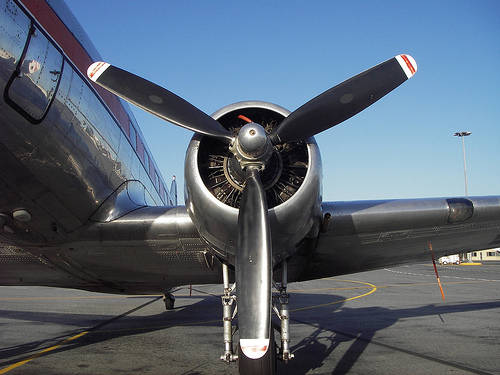
Douglas DC3 Dakota



No greater accolade for the DC-3 exists than the fact that over six decades after its first flight more than 400 remain in commercial service worldwide. Durability, longevity and profitability are but three of this outstanding aircraft's virtues.

Development of the DC-3 traces back to the earlier one off Douglas Commercial 1 (DC1) and subsequent DC2 which made their first flights in 1933 and 1934 respectively. In 1934 American Airlines requested that Douglas develop a larger more capable version of the DC2 for transcontinental US sleeper flights. The resulting DC-3 (or DST - Douglas Sleeper Transport as it then was) flew for the first time on December 17 1935.

An almost instant sales success, the DC-3 became the mainstay of the US domestic airline network in the years prior to World War 2. Aside from passenger comfort and appeal, the DC-3 offered that most important of virtues, profitability, with the result that over 400 had been sold to airlines prior to late 1941.

The entry of the United States into WW2 in December 1941 had a profound effect on the fortunes of the already successful DC-3. The US Army Air Force's requirements for transport aircraft were admirably met by the in production DC-3, with the result that as the C47 Skytrain it became the standard USAAF transport during the war. More than 10,000 were built for service with US and allied air arms.

After the war many of these aircraft became surplus to requirements and were sold off at bargain prices. The result was that demilitarised C47s became the standard postwar aircraft of almost all the world's airlines and the backbone of the world airline industry well into the 1950s. Its availability and reliability meant it proved extremely popular. Even today hundreds remain in service.

A postwar update of the DC-3, the Super DC-3, involving a stretched airframe and more powerful engines, was commercially unsuccessful. This aircraft first flew in June 1949. A small number were built for the US Navy as the R4D8 and for a US domestic airline, and a few remain in service.

10,655 DC3s were built in the USA, including 430 for commercial operators prior to US entry to WW2. 2000 or so built in Russia under license.

Two 895kW (1200hp) Pratt & Whitney R1830S1C3G Twin Wasp 14 cylinder twin row radial piston engines driving three blade variable pitch propellers, or two 895kW (1200hp) Wright SGR1820 Cyclone nine cylinder radials.

Max speed 346km/h (187kt), economical cruising speed 266km/h (143kt). Initial rate of climb 1130ft/min. Range with max fuel 2420km (1307nm), range with max payload 563km (305nm).

Typical operating empty 8030kg (17,720lb), max takeoff 12,700kg (28,000lb).

Wing span 28.96m (95ft 0in), length 19.66m (64ft 6in), height 5.16m (16ft 12in). Wing area 91.7m2 (987sq ft).

Flight crew of two.

Seating for between 28 and 32 passengers at four abreast or 21 three abreast.

Mobirise


CR821 (cn 25464) In 1948, the war surplus RAF serial # KG787 was purchased by the Gov. of Ceylon to start Air Ceylon (along with # FL566, # KG798) and received civilian registration CY-ACG before becoming VP-CAS "Viharamaha Devi". She eventually received the new country code 4R-ACG and operated till 1978 when she was transferred to the Sri Lanka Air Force as Air Ceylon became Air Lanka. New route structure was an all jet operation. In SLAF service, she became CR821. After 60+ years of service, she rests!

Air Ceylon Aircraft Index

alkva

I came to admire this machine which could lift virtually any load strapped to its back and carry it anywhere in any weather, safely and dependably. The C-47 groaned, it protested, it rattled, it leaked oil, it ran hot, it ran cold, it ran rough, it staggered along on hot days and scared you half to death, its wings flexed and twisted in a horrifying manner, it sank back to earth with a great sigh of relief - but it flew and it flew and it flew.

- Len Morgan. The C-47 was the U.S. military designation for the DC3 -

© ALKVA MMXI - MMXXII