website templates

ALK-VA
A330 Hangar


Pilots can use aircraft from ALK-VA hangar or other similar aircraft model and should state that in the mission reports.

Specifications given below are from actual aircraft data. FS aircraft may have different values.

Please check the pilot ranking required to operate an aircraft.

Air Taxi DHC-6
SriLankan A320 & A321
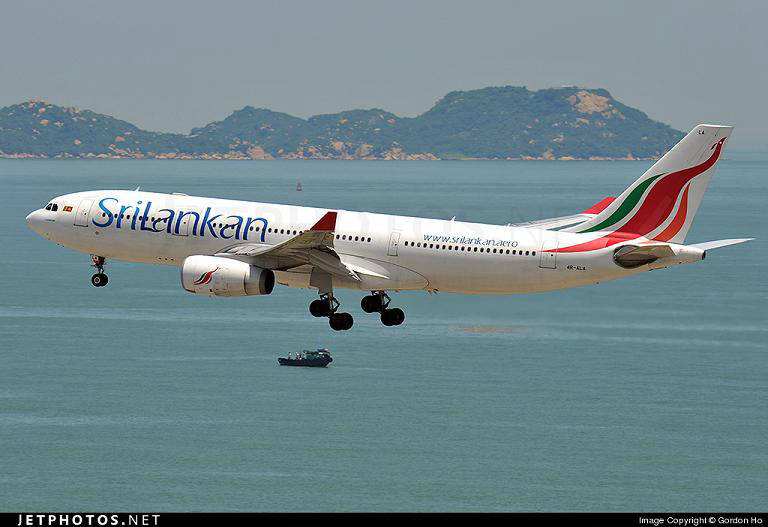
SriLankan A330
SriLankan A340

alk

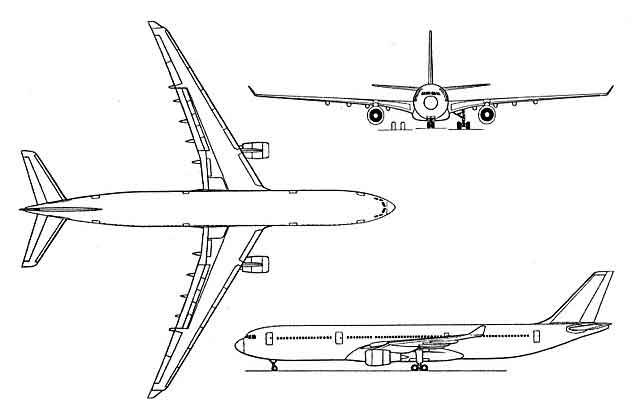
CATEGORY 2 AIRCRAFT: A330-200 / A330-300


The A330-200 is the shorter-fuselage variant of Airbus’ A330 twin-engine wide body family, and has the versatility to cover all ranges from short-haul to true long-haul, with ideal sizing for point-to-point operations.

Its optimised 222-inch fuselage cross-section – which is shared with the other members of Airbus’ A330/A340 Family – accommodates 253 passengers in a comfortable two-class cabin layout that provides more window and aisle seats in much quieter cabins. As a modern jetliner, the A330-200 accepts the latest in-flight entertainment, including video-on-demand, mobile telephone and e-mail via satellite.

Another advantage of the A330-200’s fuselage is its large-capacity under floor cargo holds, which accommodate industry-standard LD3 containers in side-by-side loading, as well as 96-inch pallets.

The A330-200 is well established with major carriers around the world, and has become a preferred aircraft for charter and leisure operators, as well as the growing low-cost long-haul market segment. With Airbus commonality in cockpit and cabin systems, an increasing number of airlines that fly the single-aisle A320 Family are discovering the advantages of stepping up to the wide body A330-200 for higher-capacity, longer-range service.

The A330-300 is the biggest member of Airbus' twinjet family and is closely related to the four engined long range A340 with which it shares near identical systems, airframe, flightdeck and wings, the only major difference being the twin (versus four) engine configuration.

A330-200: Choice of two 300.3kN (67,500lb) General Electric CF6-80E1A2s, 286.7kN (64,000lb) Pratt & Whitney PW-4164s, or PW-4168s or 302.5kN (68,000lb) Rolls-Royce Trent 768 or Trent 772 turbofans.

A330-300: Choice of two 300.3kN (67,500lb) General Electric CF6-80E1A2s, 284.7kN (64,000lb) Pratt & Whitney PW-4164s, or PW-4168s or 304.6kN (68,000lb) RollsRoyce Trent 768 or Trent 772 turbofans. Long range A330 choice of P&W PW-4164s or PW-4168s or RR Trent 768s or 772s or 324kN (73,000lb) PW-4173s.

A330-200: Max cruising speed 880km/h (475kt) at 33,000ft, economical cruising speed 860km/h (464kt). Range with max passengers and reserves at 230t MTOW 11,850km (6400nm), at 217t MTOW 8890km (4800nm).

A330-300: Max cruising speed 880km/h (475kt) at 33,000ft, economical cruising speed 860km/h (464kt). Range with 335 pax and reserves 8340km (4500nm) with CF6s, or 8430km (4550nm) with P&W engines, or 8600km (4640nm) with Trents. A330 longer range version with max passengers range 10,185km (5,500nm).

A330-200: Operating empty 120,150kg (264,875lb) with CF6 engines, 120,750kg (266,200lb) with PW4168s, or 120,250kg (265,150lb) with Trents. Max takeoff 230,000-233,000kg (507,050-513,670lb).

A330-300: Operating empty 121,870kg (268,675lb) with CF6 engines, 122,460kg (269,975lb) with PW-4000s, and 121,970kg (268,900lb) with Trents. Max takeoff 212,000kg (467,380lb).

Long range A330 - Operating empty 122,780kg (270,675lb) with PW4000s or 122,210kg (269,425lb) with CF6s, 122,300kg (269,625lb) with Trents, max takeoff 217,000kg (478,400lb).

A330-200: Wing span 60.30m (197ft 10in), length 59.00m (193ft 7in), height 16.83m (55ft 2in). Wing area 363.1m2 (3908.4sq ft).

A330-300: Wing span 60.30m (197ft 10in), length 63.69m (210ft 0in), height 16.83m (55ft 2in). Wing area 363.1m2 (3908.4sq ft).

A330-200: Flight crew of two. Passenger seating arrangements for 256 in three classes or 293 in two classes. Front and rear underbelly cargo holds can take 26 LD3 containers or six freight pallets and passenger baggage.

A330-300: Flightcrew of two. Passenger seating arrangements for 295 in three classes or 335 in two class (30 premium class at 2+3+2 and 305 economy at 2+4+2). Max passengers in high density configuration 440. Front and rear underbelly cargo holds can take 32 LD3 containers or 11 pallets.

alkva
alkva


alkva

At that time [1909] the chief engineer was almost always the chief test pilot as well. That had the fortunate result of eliminating poor engineering early in aviation.

- Igor Sikorsky, reported in 'AOPA Pilot' magazine February 2003 -

© ALKVA MMXI - MMXXII