bootstrap html templates

ALK-VA
A320/A321 Hangar


Pilots can use aircraft from ALK-VA hangar or other similar aircraft model and should state that in the mission reports.

Specifications given below are from actual aircraft data. FS aircraft may have different values.

Please check the pilot ranking required to operate an aircraft.

Air Taxi DHC-6
SriLankan A320 & A321
SriLankan A330
SriLankan A340

CATEGORY 1 AIRCRAFT: Airbus A320 / A321


Airbus launched its best-selling single-aisle product line with the A320, which continues to set industry standards for comfort and operating economy on short- to medium-haul routes. Typically seating 150 passengers in a two-class cabin – or up to 180 in a high-density layout for low-cost and charter flights – the A320 is in widespread service around the globe on services that vary from short commuter sectors in Europe, Asia and elsewhere to trans-continental flights across the United States.

The A320’s advanced technology includes the extensive use of weight-saving composites, an optimised wing that is 20 per cent is more efficient than previous designs, a centralised fault display for easier troubleshooting and lower maintenance costs, along with Airbus’ fly-by-wire flight controls.

Advantages of the fly-by-wire controls – which were pioneered on the A320 – are many. They provide total flight envelope and airframe structural protection for improved safety and reduced pilot workload, along improved flight smoothness and stability, and fewer mechanical parts.
A321 is a minimum change, stretched development of the successful A320. The A321 program was launched in November 1989 and the first development aircraft first flew on March 11 1993. European certification was awarded in December that year.

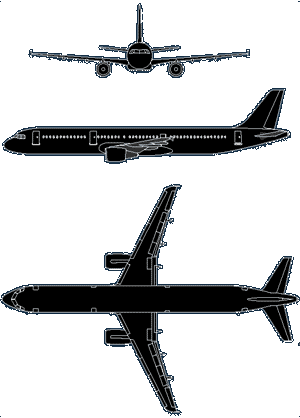
Compared with the A320 the A321's major change is the stretched fuselage, with forward and rear fuselage plugs totalling 6.93m (22ft 9in) (front plug immediately forward of wing 4.27m/14ft, rear plug directly behind the wing 2.67m/8ft 9in).

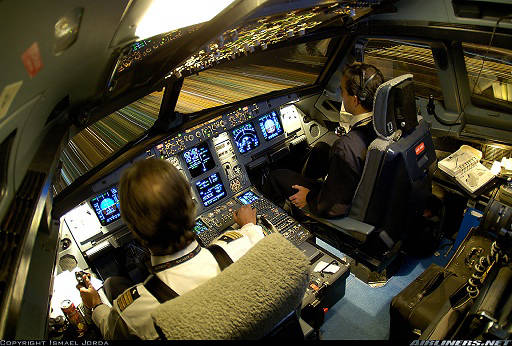
Other changes include strengthening of the undercarriage to cope with the higher weights, more powerful engines, a simplified and refined fuel system and larger tyres for better braking. A slightly modified wing with double slotted flaps and modifications to the flight controls allows the A321's handling characteristics to closely resemble the A320's. The A321 features an identical flightdeck to that on the A319 and A320, and shares the same type rating as the smaller two aircraft.
A320: Two 111.2kN to 120.1kN (25-27,000lb) CFM International CFM56-5A1 turbofans or 118kN (26,500lb) CFM56-5A3s or 120kN (27,000lb) -5B4s, or two 113.4kN (25,500lb) International Aero Engines IAE V2500-A1 or 117.9kN (26,500lb) V2527-A5s.

A321: 142.3kN (32,000lb) CFM-56-5B3s or 146.8kN (33,000lb) V-2533-A5s

A320: Max cruising speed 903km/h (487kt) at 28,000ft, economical cruising speed 840km/h (454kt) at 37,000ft. Range with 150 passengers and reserves with CFM56s 4843km (2615nm), or 5639km (3045nm), or 5278km (2850nm); with V2500s 4874km (2632nm) or optionally 5463km (2950nm) or 5676km (3065nm).

A321: Range 4907km (2650nm).

A320: Operating empty with V2500s 42,220kg (93,079lb); with CFM56s 42,175kg (92,980lb). Standard max takeoff for both versions 73,500kg (162,040lb) or optionally 75,500kg (166,445lb) or 77,000kg (169,755lb).

A321: Operating empty 48,024kg (105,875lb) with CFM-56-5B3s, 48,139kg (106,130lb) with V-2533-A5s, max takeoff 89,000kg (196,210lb) or 93,000kg (205,000lb).

A320: Wing span 34.09m (111ft 10in), length 37.57m (123ft 3in), height 11.76m (38ft 7in). Wing area 122.6m2 (1319.7sq ft).

A321: Wing span 34.09m (111ft 10in), length 44.51m (146ft 0in), height 11.76m (38ft 7in). Wing area 123.0m2 (1320sq ft).

In addition, fly-by-wire and cockpit standardization across the A320 Family are at the heart of Airbus’ commonality, which allows a pilot qualified on one Family member to fly them all, using the same type rating. Over 80 per cent of operators with 10 or more A320 Family jetliners in their fleets fly more than one model of the Airbus single-aisle product line – enabling them to benefit fully from the commonality concept through more effective scheduling of aircraft and crews.

Taking the Airbus commonality one step further, an A320-rated pilot can transition to any other Airbus jetliner with reduced training (known as “Cross-crew Qualification”), and is able to operate another Airbus aircraft type while still actively flying the A320 Family (a capability called “Mixed Fleet Flying”).

Mobirise


Airbus A320


Airbus A321

alkva

It is not necessarily impossible for human beings to fly, but it so happens that God did not give them the knowledge of how to do it. It follows, therefore, that anyone who claims that he can fly must have sought the aid of the devil. To attempt to fly is therefore sinful.

- Roger Bacon, thirteenth century Franciscan friar -

© ALKVA MMXI - MMXXII